Takalik Abaj
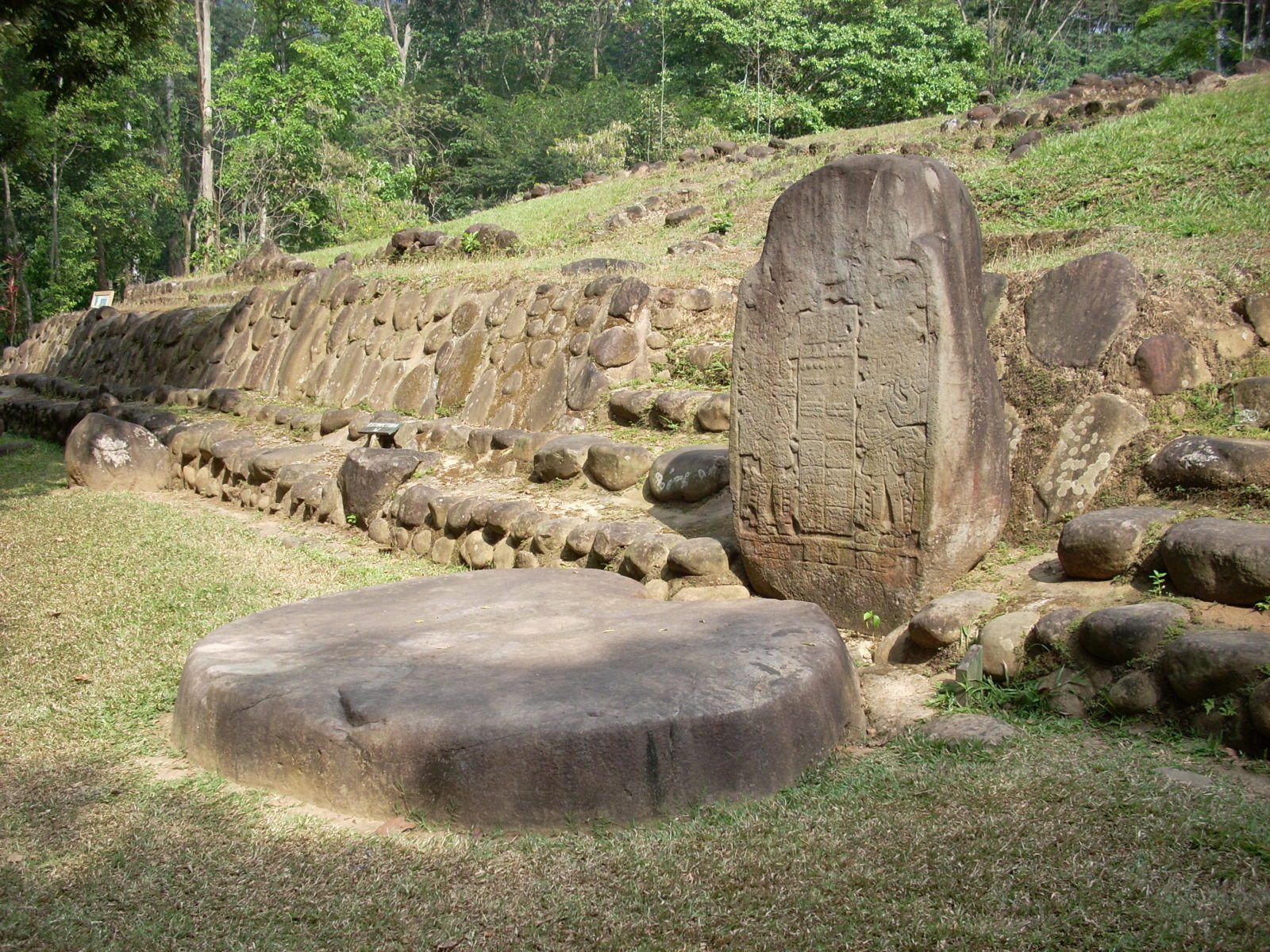
Takalik Abaj
Takalik Abaj — this Mayan site is located 9 miles (15 km) west of Retalhuleu along
Guatemala’s Pacific coast. Takalik Abaj, which means “standing stones,” was once an
important commercial and political center for Pacific coast trade routes. Cacao,
obsidian, salt, pyrite, jade, and quetzal feathers were commonly traded here. First
settled around 1800 BC, the city’s prime came between 800 BC and 200 AD. During
this time, many of the structures that still stand – including sculptures, monuments, and
zoomorphs – were likely carved.
In 2002, an intact royal grave, thought to be the city’s last Mayan ruler, was unearthed.
The excavation made headlines and was even featured in the May 2004 issue of
National Geographic. Over 275 structures have been found here. The tallest structure,
at 53 feet (16 m), is Structure 5, which is found on Terrace 3. Terrace 3 is a rectangular
temple that has three Olmec-style stone heads facing a Mayan altar. Structure 4 has
clear Mayan engravings, and some of the most impressively carved stelae are in front of
Temple 12. Structure 12 is the site’s largest structure, with a base measuring 184 by
138 feet (56 by 42 m) and dating back to 300 AD. There are fascinating sculptures
spread throughout Takalik Abaj, including zoomorphs, Olmecoid heads, and carved
monuments.